The customer
NRK (Norsk rikskringkasting), Norway's public broadcaster, documents and reports every piece of music it broadcasts through the DMA platform: a media asset management (MAM) core with ingest pipelines for audio, images and booklets, a central database, a web portal and web services, audio fingerprinting and the delivery to a music-monitoring service, plus the desktop clients Archivist and DMALive and a REST API. Next to it ran a sister installation for Rockheim, Norway's national museum of pop and rock.
What operations and support meant here
Development is only half of a platform's life. The other half is keeping it running — every day, for years, with the people who depend on it. From 2011 to 2026 we did both for DMA:
- Second- and third-level support for archivists, journalists and the rights department — from a client that will not start to an import that silently stops
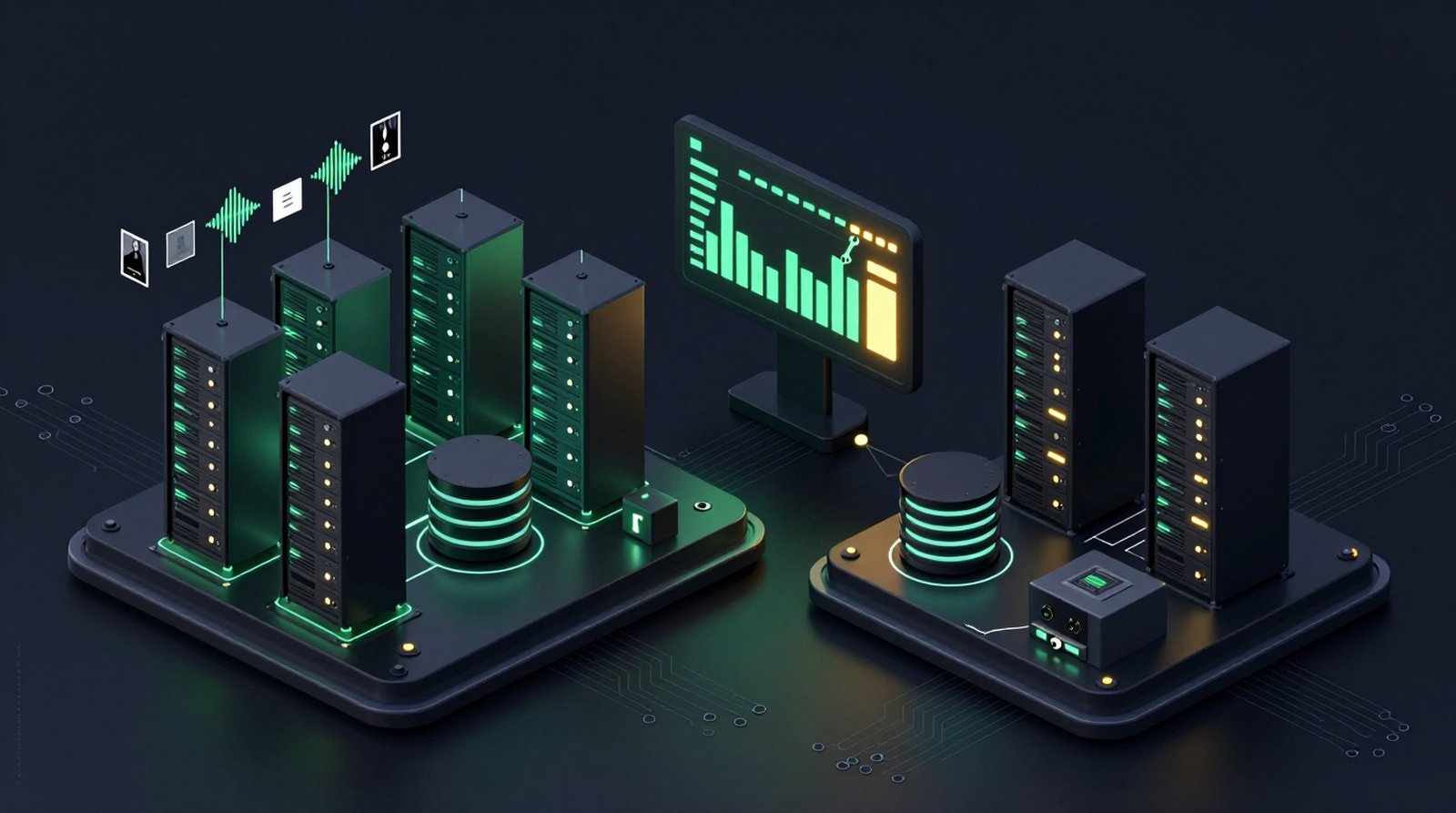
- Operating the MAM — 13 servers across two environments: production with nine servers (a six-node MAM cluster for load and redundancy, the database, the portal and the web services) and a test environment with four (two MAM nodes, database, portal). Watching queues and ingest, rolling out patches node by node, keeping production and test configurations apart
- Keeping the data flowing — ingest of recordings, images and booklets, fingerprint deliveries, exports to partner systems
- Root-cause work instead of restarts — following a stuck job down to the database, the file or the configuration that caused it
Typical problems we solved
- Long-standing error backlogs traced to their actual cause — for example text-encoding issues with Norwegian characters in database logic — and cleared for good.
- Jobs stuck for a long time released by finding the one file that blocked them, such as an image in a different format than its name suggested.
- Failed messages and notifications re-run in bulk, with the remainder sorted into what needs fixing and what can be closed.
- Configuration drift between production and test detected and corrected without downtime — followed by a safeguard in the deployment and a runbook entry.
- Stuck ingest recovered — material brought back into the archive, real losses separated from mere housekeeping.
- Queues and hanging processes cleaned up — always with a backup first.
- Special characters preserved — text recognition that dropped å, æ and ø fixed.
Supporting the move to the new system
In 2026 NRK moved its rights reporting to a new system. We supported the transition from the old side: export runs into the new system and data-quality issues found and corrected along the way. After the move, NRK took the support of DMA in-house.
Rockheim
The Rockheim museum used a MAM installation of its own to import audio from external sources and to store video, audio and images for its exhibitions and websites. Its support followed the same pattern: imports and previews, exchange with NRK's archive, database and portal issues.
What it shows
A long-running, business-critical media platform does not need heroics — it needs someone who knows it end to end, finds the actual cause and leaves a note so the next person does not have to. That is the kind of operations and support we offer for media and archive systems.
See also: NRK: 15 years of music archive and rights software for the development side.